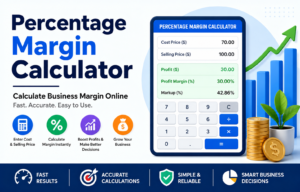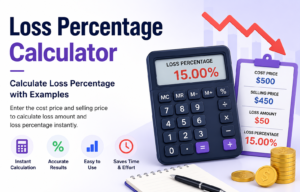
Whether you run a small business, sell products online, or simply want to understand your company’s financial performance, knowing your gross profit percentage is essential. Gross Profit Percentage Calculator: It helps you see how much money you keep after covering the direct cost of producing or purchasing your products.
A healthy gross profit percentage is one of the most important indicators of business success. Gross Profit Percentage Calculator: It allows you to evaluate whether your products are priced correctly, monitor production costs, and identify opportunities to increase profitability. Gross Profit Percentage Calculator: Businesses of all sizes use this metric to make smarter financial decisions and improve long-term performance. Gross Profit Percentage Calculator
Our Gross Profit Percentage Calculator makes the calculation quick and accurate. Gross Profit Percentage Calculator: Simply enter your revenue and cost of goods sold (COGS), and the calculator instantly shows your gross profit percentage.
The calculator is designed for speed and simplicity, making it suitable for business owners, accountants, students, freelancers, retailers, wholesalers, manufacturers, and anyone who needs to measure gross profitability. Best Gross Profit Percentage Calculator. You don’t need advanced accounting knowledge—just enter your figures and receive instant, reliable results.
Understanding your gross profit percentage can also help you compare business performance over time, analyse pricing strategies, control product costs, and make better budgeting decisions. Gross Profit Percentage Calculator. By regularly tracking this figure, you can identify trends before they become serious financial problems.
In this guide, you’ll learn:
- What gross profit percentage means
- How to calculate it
- The formula
- Real-life examples
- Why it matters
- Common mistakes to avoid
- Tips to improve your gross profit
By the end of this guide, you’ll have a clear understanding of how gross profit percentage works, how to calculate it accurately, and how to use it to make better business decisions and improve your overall profitability.
Click Here: Salary and Tax Estimator USAWhat Is Gross Profit PWhat is Gross Profit Percentage?
Gross Profit Percentage is a financial ratio that shows what percentage of your sales revenue remains after deducting the Cost of Goods Sold (COGS). A Gross Profit Percentage Calculator helps you calculate this percentage quickly and accurately without doing manual calculations.
In simple words, it tells you how much profit you make before paying other business expenses like rent, salaries, marketing, taxes, utilities, insurance, and other operating costs. Best Gross Profit Percentage Calculator. This makes it one of the most useful financial metrics for understanding your business’s profitability.
For example:
- Revenue: £1,000
- Cost of Goods Sold: £700
- Gross Profit: £300
Your gross profit percentage tells you that 30% of your sales remain after covering production costs. Best Gross Profit Percentage Calculator. This remaining profit is available to help pay operating expenses and, eventually, contribute to your net profit.
The higher the percentage, the healthier your business usually is. A higher gross profit percentage often indicates better pricing strategies, effective cost control, and stronger overall financial performance. Regularly monitoring this percentage can help businesses make informed decisions, improve profitability, and identify opportunities to reduce production costs or increase profit margins.
Read More: Profit Percentage Calculator (2026)Gross Profit Percentage Formula
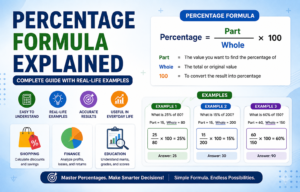
The calculation is straightforward. Once you know your total revenue and the cost of goods sold (COGS), you can quickly determine how much of your sales revenue remains as gross profit. Best Gross Profit Percentage Calculator: This percentage helps you measure the profitability of your products before operating expenses, taxes, and other business costs are deducted.
| Step | Formula | Explanation |
|---|---|---|
| Step 1 | Gross Profit = Revenue − Cost of Goods Sold | This step calculates the amount of money left after subtracting the direct costs of producing or purchasing the goods you sell. |
| Step 2 | Gross Profit Percentage = (Gross Profit ÷ Revenue) × 100 | This formula converts your gross profit into a percentage, making it easier to compare profitability across different products, time periods, or businesses. |
| Combined Formula | Gross Profit Percentage = ((Revenue − Cost of Goods Sold) ÷ Revenue) × 100 | This combined formula produces the same result in a single calculation and is commonly used in accounting, finance, and business reporting. Whether you calculate it manually or use our Gross Profit Percentage Calculator, the result helps you evaluate pricing strategies, monitor production costs, and make informed financial decisions. Regularly calculating your gross profit percentage can also help you identify changes in profitability and improve overall business performance. |
How to Use the Gross Profit Percentage Calculator
Using our calculator takes only a few seconds.
Gross Profit Percentage Calculator
Step 1
Enter your Total Revenue.
This is the total amount earned from sales.
Step 2
Enter your Cost of Goods Sold (COGS).
This includes direct costs such as:
- Materials
- Manufacturing
- Wholesale purchase costs
- Direct labour
Step 3
Click the Calculate button.
Step 4
The calculator instantly displays:
- Gross Profit
- Gross Profit Percentage
No manual calculations are needed.
Worked Example 1
Sarah owns an online clothing shop.
Revenue:
£5,000
Cost of Goods Sold:
£3,000
Calculate Gross Profit
£5,000 − £3,000 = £2,000
Calculate Percentage
(£2,000 ÷ £5,000) × 100
= 40%
Gross Profit Percentage = 40%
This means Sarah keeps 40% of every sale before paying operating expenses.
Worked Example 2
A bakery sells cakes worth:
Revenue:
£12,000
Cost of ingredients and packaging:
£8,400
Gross Profit:
£12,000 − £8,400 = £3,600
Gross Profit Percentage:
(£3,600 ÷ £12,000) × 100
= 30%
The bakery has a gross profit percentage of 30%.
Worked Example 3
A furniture business earns:
Revenue:
£25,000
Cost of Goods Sold:
£15,000
Gross Profit:
£10,000
Percentage:
(10,000 ÷ 25,000) × 100
= 40%
The business keeps 40% of every sales pound before operating costs.
Why Gross Profit Percentage Matters
Understanding this percentage helps businesses make smarter financial decisions.
Measures Business Performance
It quickly shows whether your products are generating enough profit.
Helps Set Better Prices
If your profit percentage is too low, you may need to increase prices or reduce costs.
Controls Production Costs
Tracking your gross profit helps identify rising supplier or manufacturing costs.
Compares Different Products
You can compare which products earn the highest profit.
For example:
| Product | Gross Profit % |
|---|---|
| Product A | 45% |
| Product B | 28% |
| Product C | 38% |
Product A is clearly the most profitable.
Supports Business Growth
Businesses with healthy gross profit percentages usually have more money available for:
- Marketing
- Hiring staff
- Expanding operations
- Investing in new products
What Is Included in Cost of Goods Sold?
Cost of Goods Sold only includes direct costs.
Examples include:
- Raw materials
- Manufacturing costs
- Wholesale inventory
- Factory labour
- Packaging
- Shipping from suppliers
It does not include:
- Office rent
- Employee salaries
- Advertising
- Insurance
- Website costs
- Utilities
- Taxes
Those are operating expenses.
Gross Profit vs Gross Profit Percentage
Many people confuse these two terms.
| Gross Profit | Gross Profit Percentage |
|---|---|
| Actual money earned | Percentage of revenue kept |
| Measured in currency | Measured in % |
| Shows profit amount | Shows profitability |
| Example: £2,000 | Example: 40% |
Both are useful, but the percentage makes it easier to compare businesses of different sizes.
Gross Profit vs Net Profit
These are also different.
| Gross Profit | Net Profit |
|---|---|
| Revenue − COGS | Revenue − All Expenses |
| Doesn’t include operating costs | Includes every expense |
| Higher than net profit | Usually lower |
| Shows product profitability | Shows total business profitability |
Net profit is your final earnings after every expense has been paid.
What Is a Good Gross Profit Percentage?
There isn’t one perfect number.
It depends on the industry.
Here are some general guidelines.
| Gross Profit % | Meaning |
|---|---|
| Below 20% | Low |
| 20%–40% | Average |
| 40%–60% | Good |
| Above 60% | Excellent (industry dependent) |
Some businesses naturally have lower margins.
For example:
- Grocery stores
- Wholesale suppliers
- Petrol stations
Others usually have higher margins.
Examples include:
- Software companies
- Digital products
- Consulting businesses
- Luxury brands
Always compare your percentage with businesses in the same industry.
Common Industries and Average Gross Profit
| Industry | Typical Gross Profit % |
|---|---|
| Retail | 25–40% |
| Restaurants | 25–35% |
| Manufacturing | 20–40% |
| Clothing | 40–60% |
| Software | 70–90% |
| Consulting | 60–90% |
These are general ranges and can vary between businesses.
Benefits of Tracking Gross Profit Percentage
Monitoring your percentage regularly offers many advantages.
Better Financial Decisions
Know whether your pricing strategy is working.
Easier Budget Planning
Estimate future profits more accurately.
Identify Cost Problems
Notice increases in supplier costs before they become serious.
Improve Pricing
Adjust product prices when margins become too small.
Increase Profitability
Small improvements in gross profit percentage can significantly increase overall earnings.
Common Mistakes When Calculating Gross Profit Percentage
Many beginners make these errors.
Including Operating Expenses
Only include direct production costs.
Using Net Profit Instead
Gross profit is calculated before operating expenses.
Forgetting Shipping Costs
If shipping from suppliers is part of acquiring inventory, include it in COGS.
Incorrect Revenue Figure
Use total sales before deducting expenses.
Ignoring Returns
Refunds and product returns may reduce your revenue and affect the calculation.
Tips to Improve Gross Profit Percentage
If your percentage is low, consider these strategies.
Reduce Supplier Costs
Negotiate better prices with suppliers.
Increase Selling Prices
Even a small price increase can improve margins.
Reduce Waste
Minimise damaged inventory and production waste.
Improve Inventory Management
Avoid overstocking products that don’t sell.
Focus on High-Margin Products
Promote products with stronger profit margins.
Improve Production Efficiency
Reduce manufacturing time and labour costs where possible.
Who Can Use a Gross Profit Percentage Calculator?
This calculator is useful for many people.
- Small business owners
- Retailers
- Online sellers
- Amazon sellers
- Etsy shop owners
- Students studying business
- Accountants
- Finance professionals
- Startup founders
- Freelancers selling products
Anyone who buys and sells products can benefit from understanding gross profit.
Frequently Asked Questions
What is gross profit percentage?
It is the percentage of revenue remaining after subtracting the Cost of Goods Sold.
Is gross profit the same as net profit?
No.
Gross profit only subtracts direct production costs.
Net profit subtracts every business expense.
Why is gross profit percentage important?
It measures how efficiently your business generates profit from sales before operating expenses.
Can gross profit percentage be negative?
Yes.
If your Cost of Goods Sold is higher than your revenue, your gross profit becomes negative.
What does a higher gross profit percentage mean?
A higher percentage usually means your products generate more profit before other business expenses.
How often should I calculate gross profit percentage?
Many businesses calculate it:
Monthly
Quarterly
Annually
Can service businesses use gross profit percentage?
Yes.
Instead of inventory costs, they often use direct labour and service delivery costs.
Is 50% a good gross profit percentage?
For many industries, yes.
However, what is considered “good” depends on the type of business.
Final Thoughts
A Gross Profit Percentage Calculator is a valuable tool for understanding how efficiently your business earns money from sales. Rather than focusing only on total revenue, it helps you measure how much of that income remains after covering the direct costs of producing or purchasing your products.
By tracking your gross profit percentage regularly, you can make better pricing decisions, control costs, improve profitability, and plan for long-term growth. Whether you’re a student learning financial concepts, a freelancer selling products, or a business owner managing daily operations, this simple calculation provides meaningful insight into your financial performance. Gross Profit Percentage Calculator
Use the calculator whenever you review your sales, compare products, or evaluate business performance. A healthy gross profit percentage is one of the strongest indicators that your business is on the right track. Gross Profit Percentage Calculator